INTERVIEW WITH BRUCE CONKLE

By Anita Malhotra

Based in Portland, Oregon, conceptual artist and teacher Bruce Conkle has created a body of whimsical, thoughtful works that blend unconventional materials with ironic commentary on environmental and political issues. A recipient in 2011 of the Hallie Ford Fellowship in Visual Arts, he has exhibited in Portland, New York and Chicago as well as in Canada, Brazil, Iceland and Mongolia.

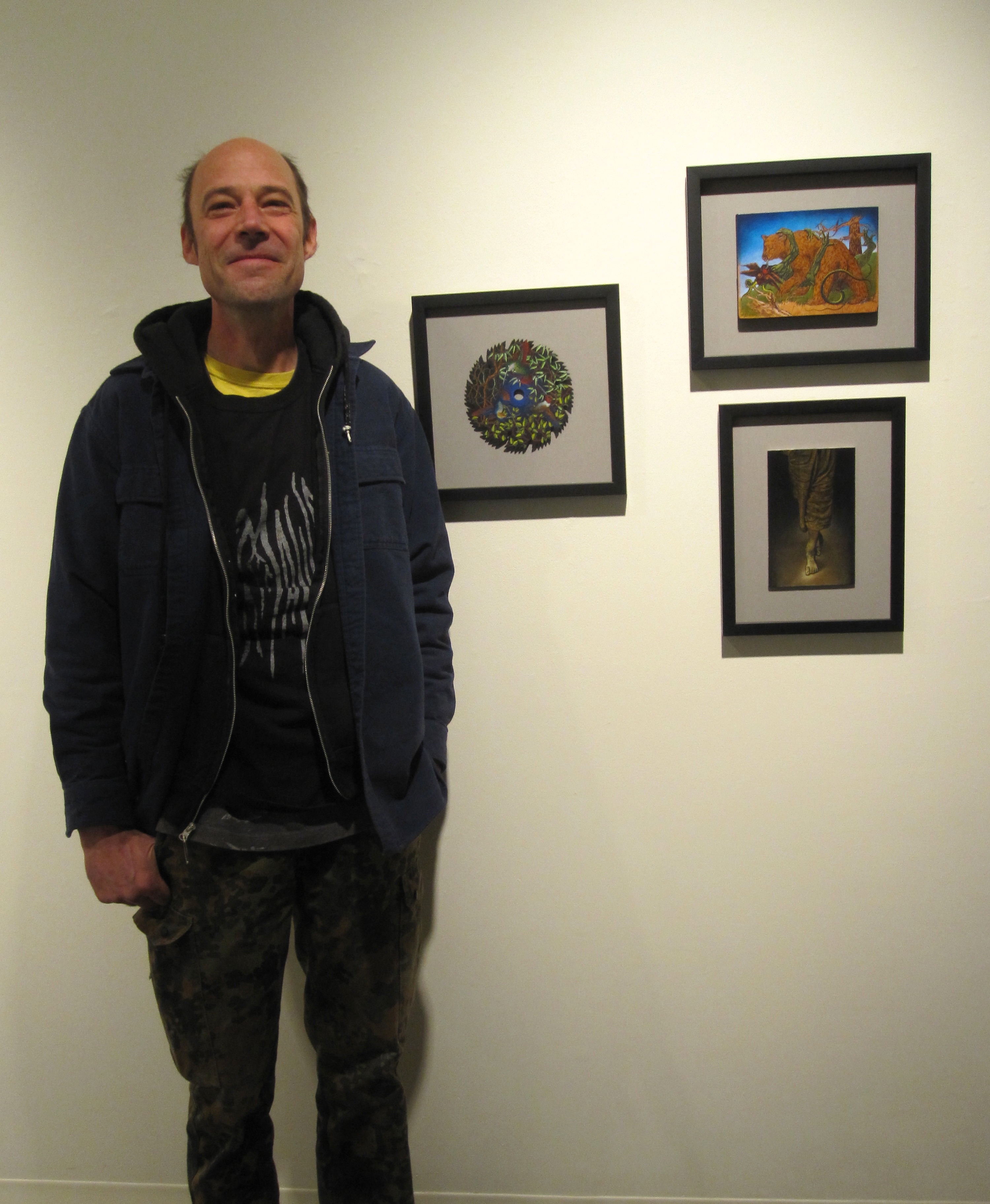
Bruce Conkle at the Red Robe Tea House in Portland, Oregon on December 7, 2013 (photo by Anita Malhotra)

Bruce Conkle at the Red Robe Tea House in Portland, Oregon on December 7, 2013 (photo by Anita Malhotra)

Bruce Conkle’s commissioned bronze sculptures, Burls will be Burls, can be seen in downtown Portland at Southwest 6th Avenue near the corner of West Burnside Street. His works are also on display at the Oranj Studio in Portland until March 15, at the Jordan Schnitzer Museum of Art in Eugene, Oregon until March 16, and at Rocksbox Fine Art in Portland from March 8 to April 27, 2014.

Anita Malhotra interviewed Bruce Conkle on December 7, 2013 at the Red Robe Tea House in Portland.

One of three sculptures in Conkle's "Burls will be Burls," commissioned for Portland's TriMet/MAX Light Rail line in 2009 (photo by Anita Malhotra)

One of three sculptures in Conkle’s “Burls will be Burls,” commissioned for Portland’s TriMet/MAX Light Rail line in 2009 (photo by Anita Malhotra)

AM: Where did you grow up?

BC: Right here in Portland.

AM: You’ve said that as a child you wanted to be both a garbage man and a cartoonist. What did you mean by that?

BC: We didn’t have a lot of toys as kids but there was a big wild area behind where we lived, and a creek, and my brother Brian and I would go down there all the time with our shovels and build dams and play outside. I would find a lot of things left down there, and I guess I was interested in that. At the same time I was also drawing quite a lot and thought I’d want to be a cartoonist when I grew up. So I was torn between being a cartoonist or a garbage man, and most kids wanted to be cowboys, astronauts or whatnot. In some respects it seems like I’ve merged those two a little bit, looking at my work over the years. Continue reading
Posted in ART | Tagged , , , , , , , , , , , , , , , , , , , , , , , , , | 2 Comments

INTERVIEW WITH ERIC STOTIK

Eric Stotik posing beside three of his paintings at the Laura Russo Gallery in Portland, Oregon on Saturday, December 7, 2013 (photo by Anita Malhotra)

Eric Stotik posing beside three of his paintings at the Laura Russo Gallery in Portland, Oregon on December 7, 2013 (photo by Anita Malhotra)

By Anita Malhotra

Portland, Oregon artist and musician Eric Stotik has been exhibiting his strikingly imaginative and technically accomplished paintings for more than three decades. 

A graduate of the Pacific Northwest College of Arts, his works can be found in museums and private collections in Portland, Seattle, Washington, Utah, New York and Berlin. In 2011, he was awarded the Regional Arts & Culture Council Fellowship Award in Visual Arts, which enabled him to create a 45-foot-long circular painting that was featured at a solo show at Portland’s Laura Russo Gallery in September 2013.

Anita Malhotra spoke with Eric Stotik on Saturday, December 7, 2013 at the Laura Russo Gallery, where his works were being featured in a group show that ended on December 21.

Detail from an untitled large-scale 2013 painting by Eric Stotik: Continuous Series (Detail 10), acrylic on paper 5' x 4.25' (photo by Bill Bachhuber)

Detail from an untitled large-scale 2013 painting by Eric Stotik: Continuous Series (Detail 10), acrylic on paper 5′ x 4.25′ (photo by Bill Bachhuber)

AM: I understand that you grew up in Papua New Guinea. What was it like growing up there?

ES: My parents were missionaries so we were in a privileged position vis-à-vis the rest of the society and we had a lot of freedom from their social strictures and from American social strictures. It was ideal – it was rural, very little electricity, no heated water, and just wild. We could leave the house and walk up a river all day and play. It was like the movie Swiss Family Robinson – where this family lives in the jungle and the kids are free to play. Continue reading

Posted in ART | Tagged , , , , , , , , , , , , , , , , , | 2 Comments

INTERVIEW WITH RAOUL BHANEJA

By Anita Malhotra

Born in the UK and raised in Canada and Germany, Raoul Bhaneja has forged a thriving and varied career in Canada as a film, TV and theatre actor and as a blues musician fronting the award-winning Toronto band Raoul and the Big Time. At last count he had appeared in more than 75 film and television projects and dozens of plays. Bhaneja has also achieved recognition for his unique solo production of Shakespeare’s Hamlet (winner of a Montreal English Critics Circle Award in 2006), in which he performs all 17 roles himself with no sets or costumes.

Anita Malhotra interviewed Bhaneja on Oct. 8, 2013 in the Lounge of Ottawa’s Arc hotel, where he was staying while shooting the CBC miniseries The Best Laid Plans.

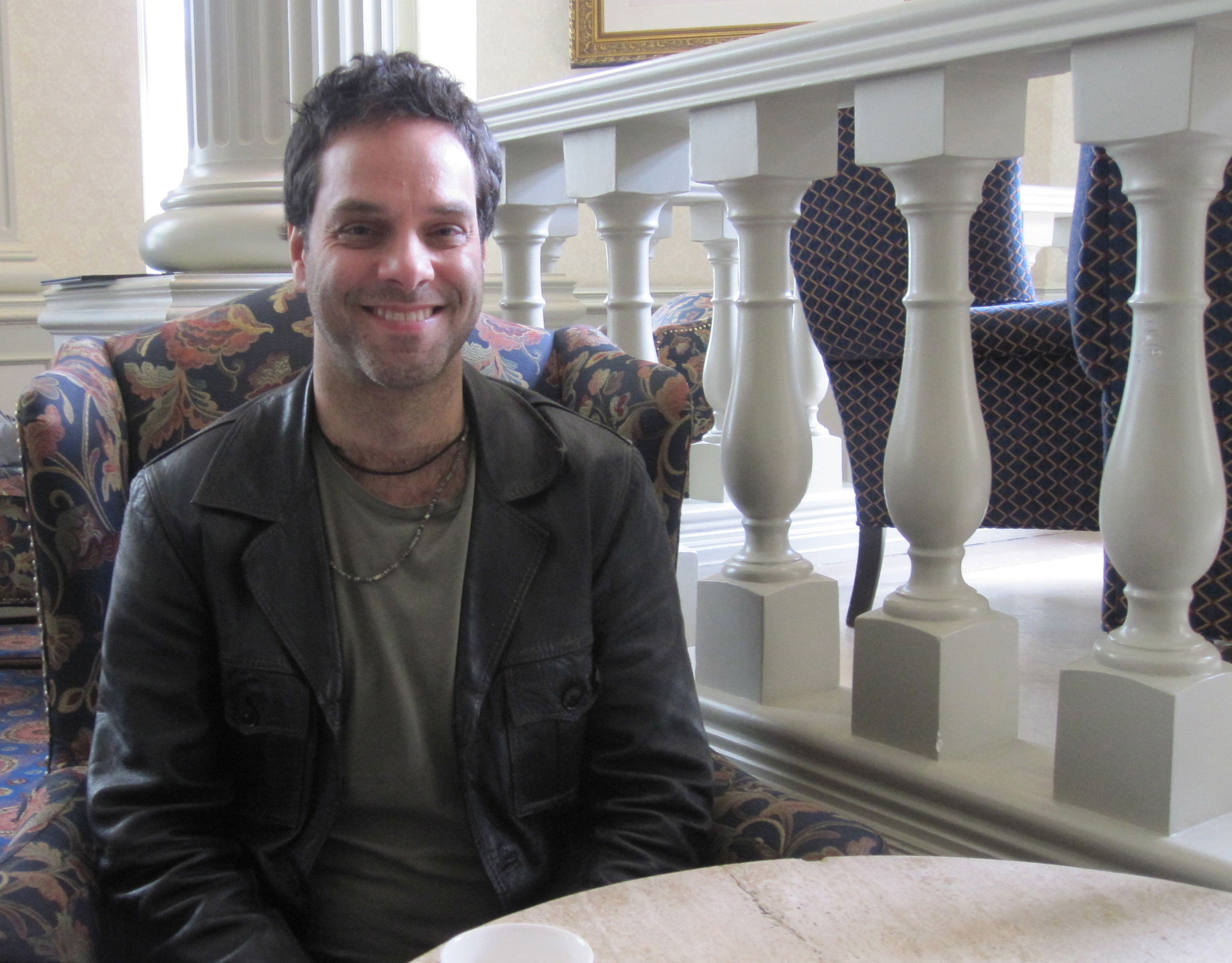
Raoul Bhaneja in the Lounge of the Arc hotel in Ottawa during his Artsmania interview on Oct. 8, 2013 (photo by Anita Malhotra)

Raoul Bhaneja in the Lounge of the Arc hotel in Ottawa during his Artsmania interview on Oct. 8, 2013 (photo by Anita Malhotra)

AM: What is your earliest memory of being a performer?

RB: I’m the youngest of two, so to get attention I loved performing, and at Christmas time we used to do concerts at our house, little sketches, and dress up in costumes. My brother loved music, so I got into music around the same time I got into acting because I wanted to be like my brother and play guitar and sing. By the time I got into the arts high school in Ottawa, I was doing plays in school, at the Ottawa Little Theatre, with professional companies, and I’d helped start A Company of Fools, which was a Shakespearean street theatre troupe. And since then I’ve done both theatre and music on and off.

Bhaneja's first Toronto head shot at the age of 23 (photo by Duncan Fraser)

Bhaneja’s first Toronto head shot at the age of 23 (photo by Duncan Fraser)

AM: How did you get into acting for television?

RB: My first job in TV was Ken Finkleman’s show The Newsroom, playing the brother of another National Theatre School graduate, Pamela Sinha, who’s now got this great show called Crash. I was still at the National Theatre School and you weren’t allowed to do work for outside, but I went to the head of the school at the time, and he said, “OK, you can go.” I was really lucky because that started to open the door. Then I did a walk-on part in Traders, and I then did this other wacky series called Twitch City, with Bruce McDonald, Don McKellar, Daniel MacIvor, Molly Parker and the late Tracy Wright. I’d seen Highway 61 and I’d loved that movie and I thought all these people were so cool.

Continue reading

Posted in THEATRE | Tagged , , , , , , , , , , , , , , , , , , | Leave a comment

INTERVIEW WITH ADAM PAOLOZZA

By Anita Malhotra

Trained at the École Jacques Lecoq in Paris, Toronto-based performer, director, writer and producer Adam Paolozza co-founded the company TheatreRUN in 2003. Since then, his innovative and sometimes quirky productions – many of them produced in collaboration with other Toronto theatre companies – have included the Dora-award-winning Spent (2009), Artaud: un portrait en décomposition (2011), and most recently The Double (2012), adapted from Dostoyevsky’s novella.

Adam Paolozza after his Artsmania interview at El Almacen Cafe in Toronto on Friday, Sept. 20, 2013 (photo by Anita Malhotra)

Adam Paolozza after his Artsmania interview at El Almacen Cafe in Toronto on Friday, Sept. 20, 2013 (photo by Anita Malhotra)

Anita Malhotra spoke with Adam Paolozza about his work on Friday, Sept. 20, 2013, at El Almacen Cafe in Toronto, three weeks before his new production of The Double was due to open at the Tarragon Theatre.

AM: Where did your interest in theatre come from?

AP: We went to the Epcot Centre when I was a kid – and I could have made this up later – but they have different pavilions from different cultures, and I think we were in the Italian pavilion – my background is Italian. There was a group of travelling players – masked players, like commedia dell’arte, and I’m pretty sure as a kid I was like, “Wow, that’s really strange and beautiful.” I think it left an impression on me.

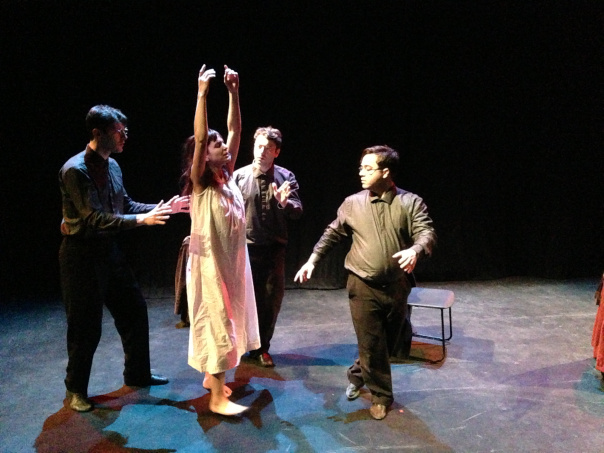
A rehearsal of Paolozza's work "Shostakovich, or 3 Days in Red" featuring Rob Feetham, Daniele Bartolini, Viktor Lukawski and Miranda Calderon (photo by Adam Paolozza)

A rehearsal of Paolozza’s work “Shostakovich, or 3 Days in Red” featuring Rob Feetham, Daniele Bartolini, Viktor Lukawski and Miranda Calderon (photo by Adam Paolozza)

Later, when I was in high school in Whitby, Ontario, we had a really good drama program and our teachers exposed us to a lot of different things and we did some plays that were more movement based than text based. Then I went to the Ryerson Theatre School, and I always had in the back of my mind that I wanted to do something a little bit less conventional. Every year at Ryerson I had a teacher that had studied at the Lecoq School in France, and that was always my favourite class. One was a mask class, one was a mime class, one was a movement class, one was just an improvisation class. At the time, the Dean of Ryerson was an old Lecoq student as well, so I applied to the school and I got in. Continue reading

Posted in THEATRE | Tagged , , , , , , , , , , , , , , , , , , , , , , , , , , , , , , , , , , | 1 Comment

INTERVIEW WITH MICHAEL HEALEY

By Anita Malhotra

Canadian playwright and actor Michael Healey has made his mark writing award-winning plays about the Canadian experience, beginning with The Drawer Boy, which earned a Governor General’s Literary Award for drama in 1999. Subsequent works included Plan B (2002), winner of a Dora award for Best New Play, Rune Arlidge (2004), Generous (2007) and Courageous (2009), the last two of which also won Doras. His most recent work, Proud, is a satirical comedy about Canadian politics that last year ignited a passionate debate about the role of the current federal government in the arts.

Anita Malhotra spoke with Michael Healey on September 18, 2013, shortly before he took to the stage to play the role of the Prime Minister (who bears an uncanny resemblance to Prime Minister Stephen Harper) in a production of Proud directed by Miles Potter at Ottawa’s Great Canadian Theatre Company.

Playwright and actor Michael Healey in the lobby of Ottawa's Great Canadian Theatre Company before a performance of his play "Proud" on September 18, 2013 (photo by Anita Malhotra)

Playwright and actor Michael Healey in the lobby of Ottawa’s Great Canadian Theatre Company before a performance of his play “Proud” on September 18, 2013 (photo by Anita Malhotra)

AM: How did you get started in theatre?

MH: I went to the Ryerson Theatre School in the mid-eighties, graduated as an actor, and I worked for about 10 years exclusively as an actor. And then in 1996 I produced my first self-written play at the Toronto Fringe Festival – mainly because I wasn’t getting the kind of parts that I wanted, so I wrote one for myself. And then 1999 was The Drawer Boy and then there have been six or seven plays, and a few adaptations since then, mixed in with a career as an actor.

AM: What are some of the highlights of your acting career?

MH: I was in a CBC series television series called This is Wonderland for a couple of seasons. George Walker, the famous Canadian playwright, wrote this series about lawyers in downtown Toronto, and it was just such a blast. When Jason Sherman was writing for the theatre, I was his go-to actor for a little while, and those plays would be highlights. Playing the federal Finance Minister in my play, Plan B, in Calgary a few years ago was an enormous amount of fun. So I managed to build a sustainable career having these two jobs: writing and acting.

Continue reading

Posted in THEATRE | Tagged , , , , , , , , , , , , , , , , , , , , , , , , , , , , , , | Leave a comment

INTERVIEW WITH JEAN-PHILIPPE TREMBLAY

posterBy Anita Malhotra

Canadian-born, U.K.-based filmmaker Jean-Philippe Tremblay spent five years researching, producing and directing the documentary Shadows of Liberty, which explores censorship and corporate control of the U.S. media. Featuring the personal stories of six journalists and interviews with media experts like Daniel Glover, Amy Goodman, Dan Rather and Julian Assange, the film has been screened at some of the world’s largest documentary film festivals, beginning with Toronto’s Hot Docs 2012. The film was also nominated for a 2012 Cinema For Peace Award (Berlin) in the category of most valuable documentary film of the year. Shadows of Liberty will receive its first U.S. TV broadcast on Friday, April 5, on Link TV. 

Anita Malhotra interviewed Jean-Philippe Tremblay on Saturday, March 23 at Ottawa’s Chateau Laurier Hotel, during a run of his film at Ottawa’s ByTowne Cinema.

Jean-Philippe Tremblay at Zoe's Lounge in Ottawa's Chateau Laurier hotel on Saturday, March 23, 2013 (photo by Anita Malhotra)

Jean-Philippe Tremblay at Zoe’s Lounge in Ottawa’s Chateau Laurier hotel on Saturday, March 23, 2013 (photo by Anita Malhotra)

AM:  How did you get started in filmmaking?

JPT: I was always interested in film, since I was a young teenager. I was attracted by film mainly because I love the freedom of approaching different subjects and the freedom you have in terms of travelling in different parts of the world. I minored in film at Carleton University and had different jobs in Ottawa. One was an assistant to the Minister of the Environment at the time, Pierre H. Vincent. He said, “What do you want to do – what’s your forte? And I said, “I want to make films.” Then he said, “Why don’t you make films about me and I’ll show them at conferences.” And so I made my first five- or 10-minute film about him. Continue reading

Posted in FILM | Tagged , , , , , , , , , , , , , , , , , , , , , , , , , , , , , , | Leave a comment

INTERVIEW WITH SARITA MANDANNA

By Anita Malhotra

Born in India, Sarita Mandanna was working in New York as a finance professional when she wrote her debut novel, Tiger Hills, an epic historical saga set in Southern India that follows six decades in the life of a remarkable woman. Released in 2010 to great acclaim, Tiger Hills was subsequently translated into 14 languages and sold in 18 countries. It was named Editor’s Choice in the New York Times, selected as a Top Ten Read for Autumn 2010 by The Times, UK, and was long-listed for the 2011 Man Asian Literary Prize, among other accolades.

Anita Malhotra spoke with Mandanna, who now lives in Toronto, by phone on August 31, 2012.

299698_486998897997918_326676916_n

Sarita Mandanna in 2012 (photo courtesy of Sarita Mandanna)

AM: Was the success of your novel Tiger Hills a surprise to you?

SM: It all feels a little bit like a dream to be honest. When I started writing Tiger Hills, I was working in private equity in New York and I wrote this book purely for the pleasure of it. Nobody knew I was working on it except my immediate family and a couple of friends. During the entire process of writing the book, I didn’t allow myself to think about whether or not it would get published. I was jumping in blind into the deep end. When I did get an agent and realized the book would get published, I asked myself, “What would be a true measure of success to me?” And I thought that if the book and the story and the protagonist managed to touch even one person in every country that it’s published, it would make all that hard work and effort – five years of writing – worthwhile. So anything that’s happened over and beyond that has been pure gravy.

Tiger Hills Canada cover

First released in 2010, “Tiger Hills” has been published in 14 languages.

AM: Your career was in finance. Had you ever considered a career related to writing?

SM: No, it was finance all the way and it was actually a process of elimination. My mom’s a doctor and she said to both my sister and I, “Doctors have bad hours.” And it turned out I had no stomach for dissection in biology class – it made me literally sick to my stomach. So I knew practicing medicine was not for me. I liked math and I just kept on going down that path.  But I’ve always been an avid reader and I have my mom to thank for that. She loves books and my sister and I have grown up in an environment where we’ve always been surrounded by books. I still remember my English teacher in high school – I think I topped the school in English – telling my mom, “You know, she should write. I think she should be a journalist.” Continue reading

Posted in BOOKS | Tagged , , , , , , , , , , , , , , , , , , , , | 1 Comment

INTERVIEW WITH CONRAD TAO

By Anita Malhotra

At the age of 18, Conrad Tao has already forged three remarkable music careers. Born in Illinois in 1994, Tao began playing the piano when he was just 1 1/2, gave his first recital at age four, and made his concerto debut at eight. While studying piano and violin in the Pre-College Division of the Juilliard School for nine years, he built his concert careers and amassed eight ASCAP Morton Young Composer Awards.

Tao’s accolades include being named a U.S. Presidential Scholar in the Arts, receiving a Gilmore Young Artist Award and being awarded an Avery Fisher Career Grant. He was recently commissioned by the Dallas Symphony Orchestra to write a piece observing the fiftieth anniversary of John F. Kennedy’s assassination.

Tao spoke to Anita Malhotra by telephone on September 1, 2012 as he strolled near the campus of Columbia University, where he is enrolled in a joint program with the Juilliard School.

Conrad Tao in 2011

AM: You’ve accomplished so much in a short time as a pianist, violinist and composer. Which activities are taking up most of your time right now?

CT: I would probably say that practicing and playing concerts and travelling does take up the bulk of my time professionally. But the nature of playing the piano versus composing music is very different. Piano requires this almost physical conditioning in the sense that you constantly have to be prepared and physically able to play certain basics. And composing is much more – for me, at least – this kind of slow and gradual process punctured by certain very sudden moments of inspiration.

Tao with Hillary Clinton on September 24, 2008 after he was named a Davidson Fellow Laureate (photo from the Davidson Institute for Talent Development)

Tao with Hillary Clinton on September 24, 2008 after he was named a Davidson Fellow Laureate (photo from the Davidson Institute for Talent Development)

AM: Tell me about your most recent round of touring. Where did you go, and what was it like?

CT: I’ve been fortunate to perform in many places around the world, across the country, and in Europe, Mexico and South America recently. Going to Europe in May was quite a lovely experience – it was a whirlwind experience.  It was five recitals in 10 days, each one in a different place in Europe. So I touched Munich, Berlin, Paris, Southampton and London. I had never actually spent time in Munich. It was a stunning, beautiful city. And it was just a fabulous experience for me because I love going to a place very different from the U.S. and absorbing how people respond to the music. Continue reading

Posted in MUSIC | Tagged , , , , , , , , , , , , , , , , , , , , , , , , , , , , , , , | Leave a comment

INTERVIEW WITH JACK DE KEYZER

By Anita Malhotra

Canadian guitarist, singer and songwriter Jack de Keyzer has been performing, recording and composing the blues for more than three decades. Along the way he has released eight albums and received a host of awards, including two Junos for Blues Album of the Year, seven Maple Blues Awards and an International Songwriting Competition award. 

De Keyzer spoke to Anita Malhotra about his early years, Juno wins and current projects shortly before a rockin’ live gig at on August 24, 2012 at Ottawa’s Rainbow Bistro.

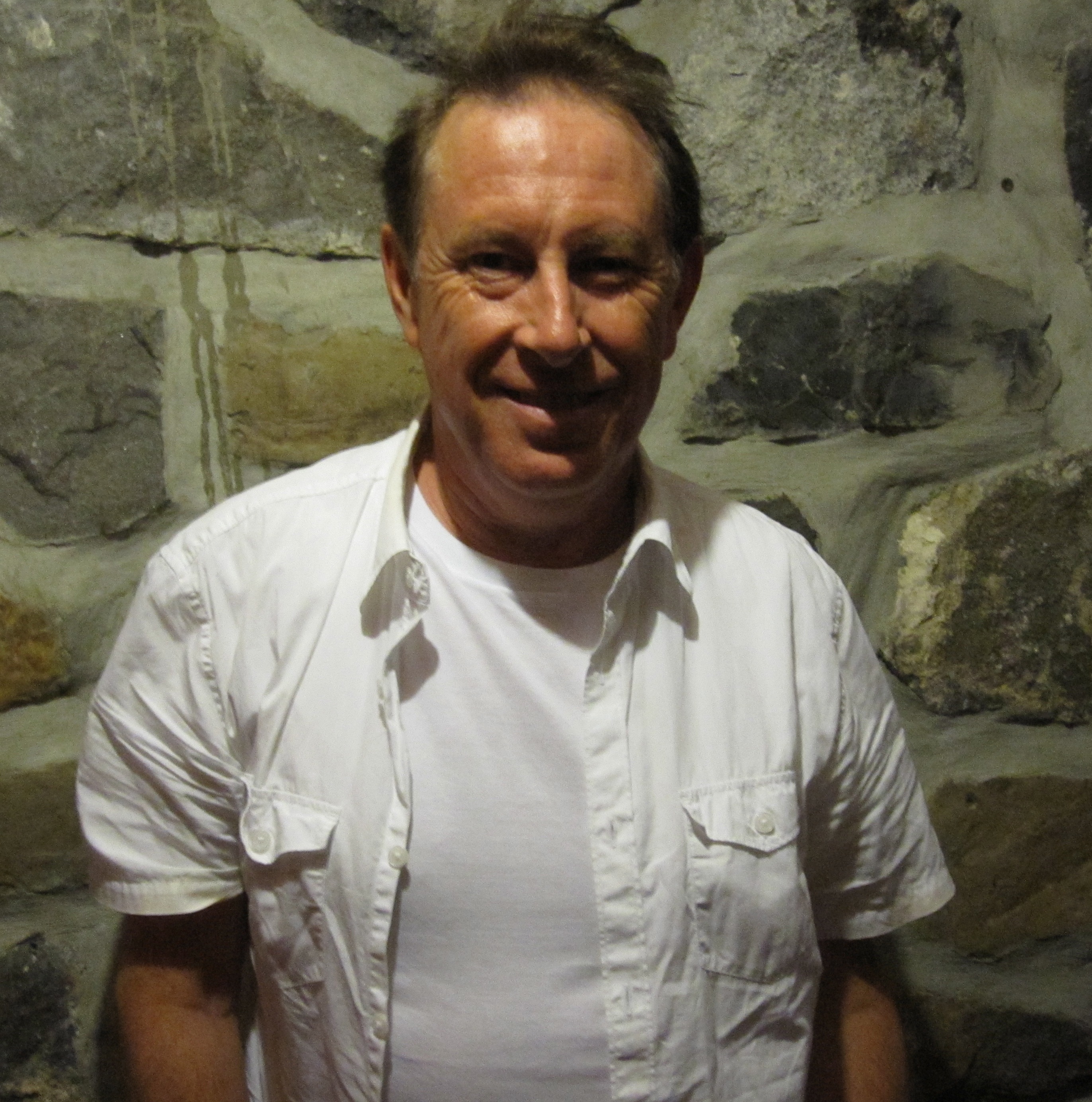
Jack de Keyzer at the Rainbow Bistro in Ottawa shortly before his gig on Aug. 24, 2012

Jack de Keyzer at the Rainbow Bistro in Ottawa shortly before his gig on Aug. 24, 2012

AM: You were born in England and then came to Canada at a fairly early age. How did you get started in music?

JK: I think I was born with music inside me.  Ever since I can remember I was enamored by music and guitar. When I grew up in England there was a guy named Cliff Richard who was kind of like the English Elvis, and his band was called The Shadows – they were a guitar instrumental band. So that’s where my first inspirations and idols came from. Continue reading

Posted in MUSIC | Tagged , , , , , , , , , , , , , , , , , , , , , , , , , , , , , , | 2 Comments

INTERVIEW WITH BTOY (ANDREA MICHAELSSON)

By Anita Malhotra

Born and based in Barcelona, BTOY (Andrea Michaelsson) has been creating her distinctive stencil-based art since the early 2000s, first in collaboration with artist Ilya Mayer and now on her own. Her posters, murals, prints and canvases – many featuring female pop-culture icons – can be found in the streets and galleries of Spain, all over Europe, and in Latin America and Indonesia.

Anita Malhotra interviewed BTOY at her studio in Gràcia, Barcelona on February 24, 2012.

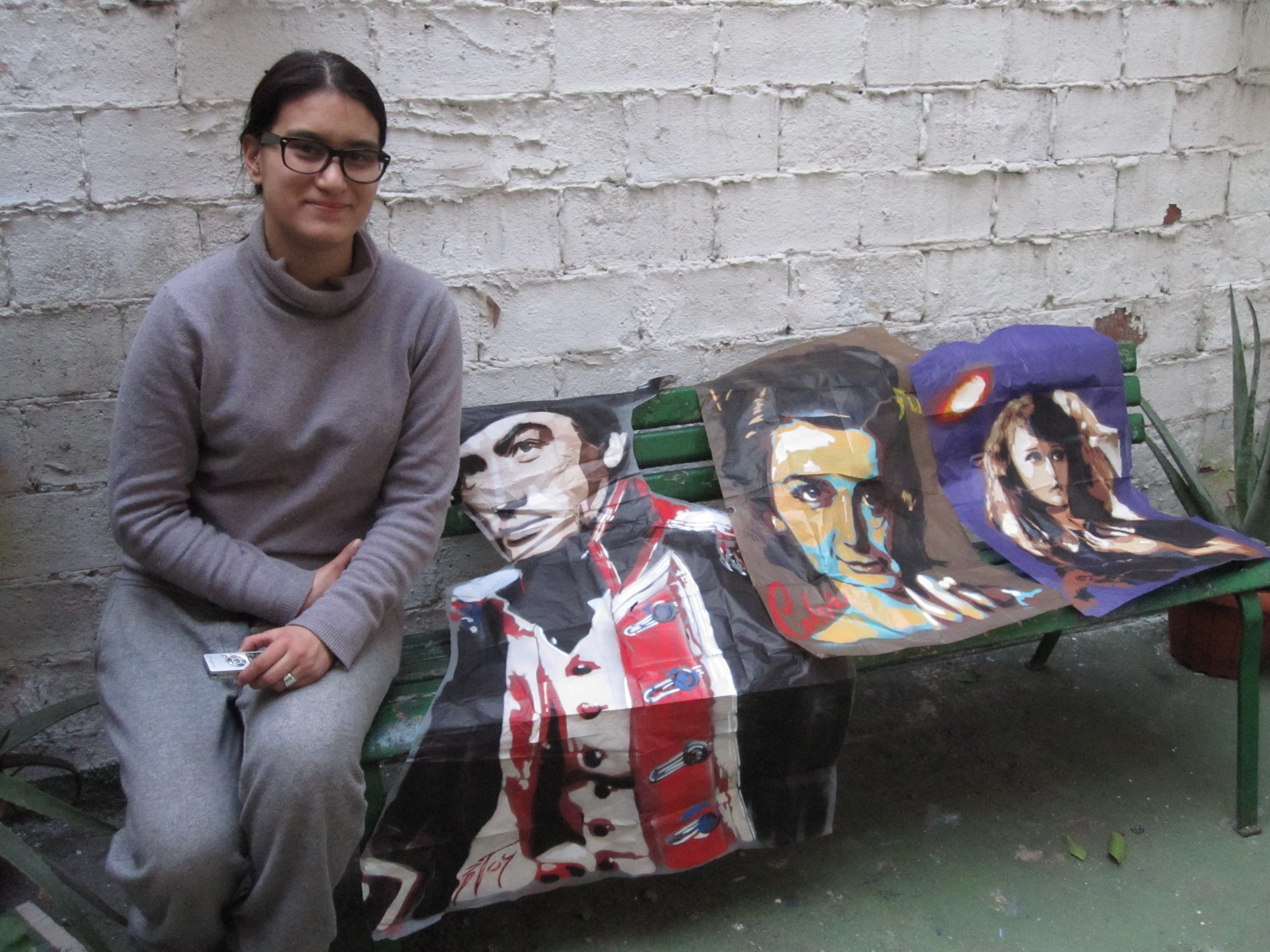
BTOY (Andrea Michaelsson) on the terrace of her Gracia Barcelona studio with her stencil works of Gary Cooper, Natalie Wood and Dolores Costello (photo by Anita Malhotra, February 24, 2012)

BTOY (Andrea Michaelsson) on the terrace of her Gracia, Barcelona studio with her stencil works of Gary Cooper, Natalie Wood and Dolores Costello (photo by Anita Malhotra, February 24, 2012)

AM: Tell me about your early experiences making art.

BTOY: I started to paint 10 years ago. For me painting is an escape from my stress. It completely distracts my mind.

AM: How old were you?

Silent film star Clara Bow as portrayed in street art by BTOY (photo by BTOYandrea, Flickr Creative Commons, June 8, 2008)

Silent film star Clara Bow as portrayed in street art by BTOY (photo by BTOYandrea, Flickr Creative Commons, June 8, 2008)

BTOY: I was 26. My mother died and I started to paint.

AM: What were you doing before that? Were you studying at a university?

BTOY: Yes, I studied law for four years and after one year I thought, “This is not my career. I think I’ve made a big mistake.” So I changed. I started to study photography and I was in a professional school of photography for three years. Photography was the basis of my painting. I always use photographs when I paint.

AM: Tell me about your early painting and your early photography. What were you portraying?

BTOY: I was influenced by the photographs of Cartier-Bresson and their composition. Composition is very important for me when I paint. I don’t use the photographs of Cartier-Bresson in my work but I sometimes use the photographs of Helen Levitt or Lewis Hine. I also use photographs of Hollywood actresses the Hollywood film icons of silent films, like Clara Bow, Louise Brooks, etcetera. Continue reading

Posted in ART | Tagged , , , , , , , , , , , , , , , , , , , , , , , , , , , , , | 6 Comments

INTERVIEW WITH PETER MEINKE

By Anita Malhotra

Florida-based poet and short story writer Peter Meinke is the author of 14 books of poetry, including seven in the Pitt Poetry Series (University of Pittsburgh Press). He has also published two short story collections, two children’s books, and a guide to poetry writing and reading. His short story collection The Piano Tuner won the Flannery O’Connor Award for Short Fiction in 1986, and he has also received numerous awards for his poems, including three from the Poetry Society of America.

Meinke directed the Writing Workshop at St. Petersburg’s Eckerd College for 27 years, and served as writer-in-residence at more than a dozen other colleges and universities. In 2009, he was appointed the first ever Poet Laureate of St. Petersburg.

Anita Malhotra interviewed Meinke on December 23, 2011, at his St. Petersburg home, where he lives with his wife, Jeanne Clark, a New Yorker magazine artist who has illustrated many of his books.

Peter Meinke at his St. Petersburg, Florida home on December 23, 2011 (photo by Anita Malhotra)

AM: How did you get interested in poetry?

Meinke: I got interested when I was very young, after I found some poetry books and anthologies that my mother had. I think one was the Oscar WilliamsTreasury. For some reason I just took to it and liked it. This was in Brooklyn, and we were a blue-collar family on the rise. My father was a stock boy who gradually became a prosperous salesman. All of my friends wanted to play for the Brooklyn Dodgers, so I thought it wisest to keep my attraction to poetry a secret, and didn’t tell anyone I was writing it until high school. I showed some poems to a couple of teachers, and they made me stand up and read them, so I took some teasing. I didn’t publish or print anything, but my high school yearbook says, “Peter Meinke – Wants to be: writer. Probably will be: censored.”  And it came true, much to my surprise.

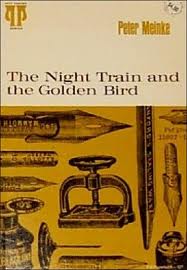
The Night Train & the Golden Bird (1977), Meinke's first Pitt Press poetry collection

The Night Train & the Golden Bird (1977), Meinke’s first Pitt Press poetry collection

After high school I went to Hamilton College. This was in the early ’50s, and there were no writing workshops back then. I was writing some very old-fashioned poetry and published some in the Hamilton literary magazines. When I graduated, I was drafted. The Korean War had just ended, but we all were drafted anyway. Fortunately, I was sent to Germany, and was stationed close to a couple of friends who were also interested in writing. We went to Paris together, and wandered around following the trails of Fitzgerald, Hemingway, Pound and others. Throughout my two army years, I kept on writing, and thought more seriously of myself as a poet, but sent nothing out. Continue reading

Posted in BOOKS | Tagged , , , , , , , , , , , , , , , , , , , , , , , | 1 Comment

INTERVIEW WITH CHARLES BERNSTEIN

By Anita Malhotra

Hollywood film composer Charles Bernstein has written scores for more than 100 feature films, TV movies and documentaries. Drawing upon a background in classical music (including composition studies at Juilliard) and a fluency in pop, world, jazz and electronic idioms, his career has spanned the film industry’s transition from the mechanical to digital age.

His credits include scores for the Dracula spoof Love at First Bite (1979); the horror flicks Cujo (1983) and A Nightmare on Elm Street (1984); the made-for-television drama Miss Evers’ Boys (1997); and the award-winning documentaries Maya Lin: A Strong Clear Vision (1994) and After Innocence (2005). His earlier music was also used by Quentin Tarantino in his movies Kill Bill (2003) and Inglourious Basterds (2009).

A long-serving member of the Board of Governors of the Academy of Motion Picture Arts and Sciences, Bernstein is also the author of two books of essays on film music and composers.

Charles Bernstein just before his Nov. 13, 2011 interview at La Bottega Marino Cafe on Santa Monica Blvd. in Los Angeles

Charles Bernstein before his Nov. 13, 2011 interview at La Bottega Marino Cafe on Santa Monica Blvd.in Los Angeles(photo by Anita Malhotra)

Anita Malhotra interviewed Bernstein in Los Angeles on Nov. 13, 2011, shortly after he gave a seminar on film composing at the 2011 West L.A. Music Expo.

AM: Where did your love of music and film come from?

Bernstein: Last night I was with a group honoring the great actor James Earl Jones, and he told an anecdote about the first time he ever saw a film. He was a little boy of about five years old and it was in a gap between two buildings where they stretched a sheet and projected a movie. As soon as the movie came on, he dived under a bench and said, “Take those people away. Make it go away.” It scared him.

James Earl Jones speaking to guests at Winfield House, London on Jan. 18, 2010 (photo by usembassylondon, Flickr Creative Commons)

James Earl Jones speaking to guests at Winfield House, London on Jan. 18, 2010 (photo by usembassylondon, Flickr Creative Commons)

That was his first experience with a film, and mine was similar. I was in kindergarten and they were showing Tom Sawyer in the hallway on the wall outside the class. I was terrified – I looked behind the pull-down screen and I couldn’t figure out where the people were. It was creepy.  Here I am making my living in film, and some of the films are even scary films, and yet my first experience was, “I don’t want to have anything to do with it.” But little by little the magic of being in a theatre and seeing people responding in unison was very appealing to me. People would laugh together, cry together, and where else does that happen? And then, as I grew older, the idea of using that as a place for telling stories – it’s a storytelling medium, and I love stories – so eventually the idea of being a film lover just developed. Continue reading

Posted in FILM | Tagged , , , , , , , , , , , , , , , , , , , , , , , , , , , , , , , , , , , | 3 Comments

INTERVIEW WITH NAOMI DUGUID

By Anita Malhotra

World traveller, writer, photographer and cook, Naomi Duguid is equally at home exploring the culinary offerings of countries like Thailand and Tibet as she is recreating them in her Toronto kitchen. She has co-authored six award-winning travel cookbooks (with former partner Jeffrey Alford) that explore the cuisines of Southeast Asia, the Indian subcontinent, the Middle East, Europe and Africa through photographs, recipes and stories. Two of the books, Flatbreads & Flavors (1995) and Hot Sour Salty Sweet (2000), were honoured with the James Beard Foundation Cookbook of the Year award and Hot Sour Salty Sweet has just gone into its eighth printing.

Duguid has recently completed work on a new book, Rivers of Flavor Recipes and Travel Tales from Burma, which will be published next fall.  Anita Malhotra interviewed Duguid, who was at her Toronto home, via Skype video on November 5, 2011, a few days before she left on the latest of many trips to Thailand and Burma.

Naomi Duguid speaking at the Women's Culinary Network Woman of the Year Awards in 2009 (photo by Laura Berman)

Naomi Duguid speaking at the Women’s Culinary Network Woman of the Year Awards in 2009 (photo by Laura Berman)

AM: You have many interests – food, travel, writing and photography. How did each of these develop?

ND: I’ve always assumed that the whole world was out there to be explored or dreamed about. I was a reader as a child – still am. My grandfather had been to India as a young man, so the larger world was there. I remember going to England when I was 10 with my mother and brother because my father had a business trip, and my mother said to us, “Now, the people in England won’t be curious about you and your lives, but you have to remember to ask them about how they think and what they do.”  It was a very good lesson for travel – I’ve never forgotten. When I was 17, I lived in France for a year, and then I did my third year away at the London School of Economics. I like being a traveller, wherever I am. I’m a person who likes to not know what’s around the corner and to move forward towards the corner.  And it turns out that travel is one way of doing that, but I can also do it walking or bicycling the streets of Toronto.

"Flatbreads & Flavors," the first of six travel cookbooks co-authored by Naomi Duguid and Jeffrey Alford

“Flatbreads & Flavors,” the first of six travel cookbooks co-authored by Naomi Duguid and Jeffrey Alford

AM: What about your interest in food? Does that date back to an early age?

ND: The things I’ve done the last 25 or 30 years arise out of travel, but my undergraduate degree was in geography. I really like to understand how things work – how things work for people emotionally and how things work in a geeky, practical way like, “Where does the rain fall?” and “What grows?” So food, of course, is, “How do people live? What do they grow? What do they have, what don’t they have? How do they make do? How do they work around the problem of a shortage of water or a shortage of fuel?” Continue reading

Posted in BOOKS | Tagged , , , , , , , , , , , , , , , , | 1 Comment

INTERVIEW WITH DENNIS DORTCH

By Anita Malhotra

Dennis Dortch is a Los Angeles-based filmmaker whose debut feature – A Good Day to be Black & Sexy – is a series of vignettes that aim to portray Black sexuality realistically. Screened at the 2008 Sundance Film Festival, the film has aired on Showtime and The Movie Channel and is also available on DVD and by Netflix video streaming. Anita Malhotra spoke with Dortch, who was at his L.A. home, via Skype video on September 2, 2011.

Filmmaker Dennis Dortch

Filmmaker Dennis Dortch

AM: How did you get into filmmaking?

Dortch: It was at college – Loyola Marymount. I was a recording arts major and shared some of the same classes as the film majors, so I took the “intro to film” class and I liked it so much I decided to change my major and try it out.

AM: As a child, did you have an interest in film?

Dortch: I wrote a lot of short stories and made up characters, but I didn’t really think about it as film. It never really occurred to me.

AM: Did you grow up in L.A.?

Dortch: No, I grew up all over the place. I grew up in El Paso, Texas, of all places, up until the age of 10. And my mother remarried a military man, so we travelled the world and went all over the United States and the world from there.

Dortch at the age of 4

Dortch at the age of 4

AM: Tell me about your earliest films.

Dortch: I made a couple of films in college. One is called Honey. It’s sort of a surreal Blaxploitation movie, and there’s one I did for Slamdance, called the White Girl Theme.

AM: I’ve read that you used Super 8 to shoot Honey. Why did you use that format?

Dortch: At the time the school was still using Super 8 and my girlfriend and partner uses Super 8 a lot because she likes that look, but it’s a lost art. I still would use Super 8 now for different things because you can’t really beat that look. You don’t really want to fake it either. Continue reading

Posted in FILM | Tagged , , , , , , , , , , , , , , , , , , , , , , , | 2 Comments

INTERVIEW WITH COLIN MACK

By Anita Malhotra

Ottawa-based composer Colin Mack’s evocative pieces for piano, chamber ensemble, orchestra and voice have been broadcast and distributed by CBC Radio, Radio-Canada, Galaxie and the National Film Board. On July 11, 2011, a concert dedicated to his work was held at Ottawa’s Music and Beyond arts festival. Anita Malhotra spoke with Mack at his home on July 22, 2011.

Colin Mack at his house on July 22, 2011 following his Artsmania interview

Colin Mack at his house on July 22, 2011 following his Artsmania interview (photo by Anita Malhotra)

AM: Tell me about your earliest experiences in music.

Mack: My mother was my first piano teacher, so I began piano at the age of five, and three or four years later – I was living in Victoria at the time – I started taking piano lessons at the Victoria Conservatory of Music. We moved to Ottawa when I was about 12 or 13 and I continued piano lessons with Douglas Voice and later with Jean-Paul Sevilla at the University of Ottawa. Although I did some composing as a teenager, I didn’t seriously begin writing music until university. In my third year I decided to stop piano performance and concentrate on composition, studying with Steven Gellman.

Mack at work composing in his studio

Mack at work composing in his studio (photo by Anita Malhotra)

AM: Where did the impetus come from to express yourself as a composer?

Mack: I remember being struck by Debussy’s Hommage à S. Pickwick, where he cites God Save the Queen in his tongue-in-cheek prelude, and I wrote a pastiche of this when I was 12 or 13. Later, it was the influence of Olivier Messiaen – my first pieces were definitely influenced by his music and his modes. I was also influenced by the freedom of being able to improvise at the piano, and taken with the fact that the music that you see on the page begins this way – in the mind and often in a very vague way.

It was only after performing music for a while that I began to understand that I could write music, or at least aspire to write music like some of the classics that I’d been playing for 10 or 15 years. I think the idea that that music is not written in stone – that there are many, many choices that go into writing the music that ends up being performed – interested me. Continue reading

Posted in MUSIC | Tagged , , , , , , , , , , , , , , , , , , , , | Leave a comment