INTERVIEW WITH YVON SOGLO (CRAZY SMOOTH)

By Anita Malhotra

Yvon Soglo (Crazy Smooth) is a Benin-born, Ottawa-based dancer, choreographer and teacher who specializes in b-boying, the original form of hip hop dance. He is also the founder and director of the dance company Bboyizm, which will present Izm, a one-hour work he created, at the 2011 Canada Dance Festival on June 18, 2011.

Anita Malhotra spoke with Soglo on June 11, 2011 at his rehearsal space in Ottawa’s west end, just before one of his final rehearsals.

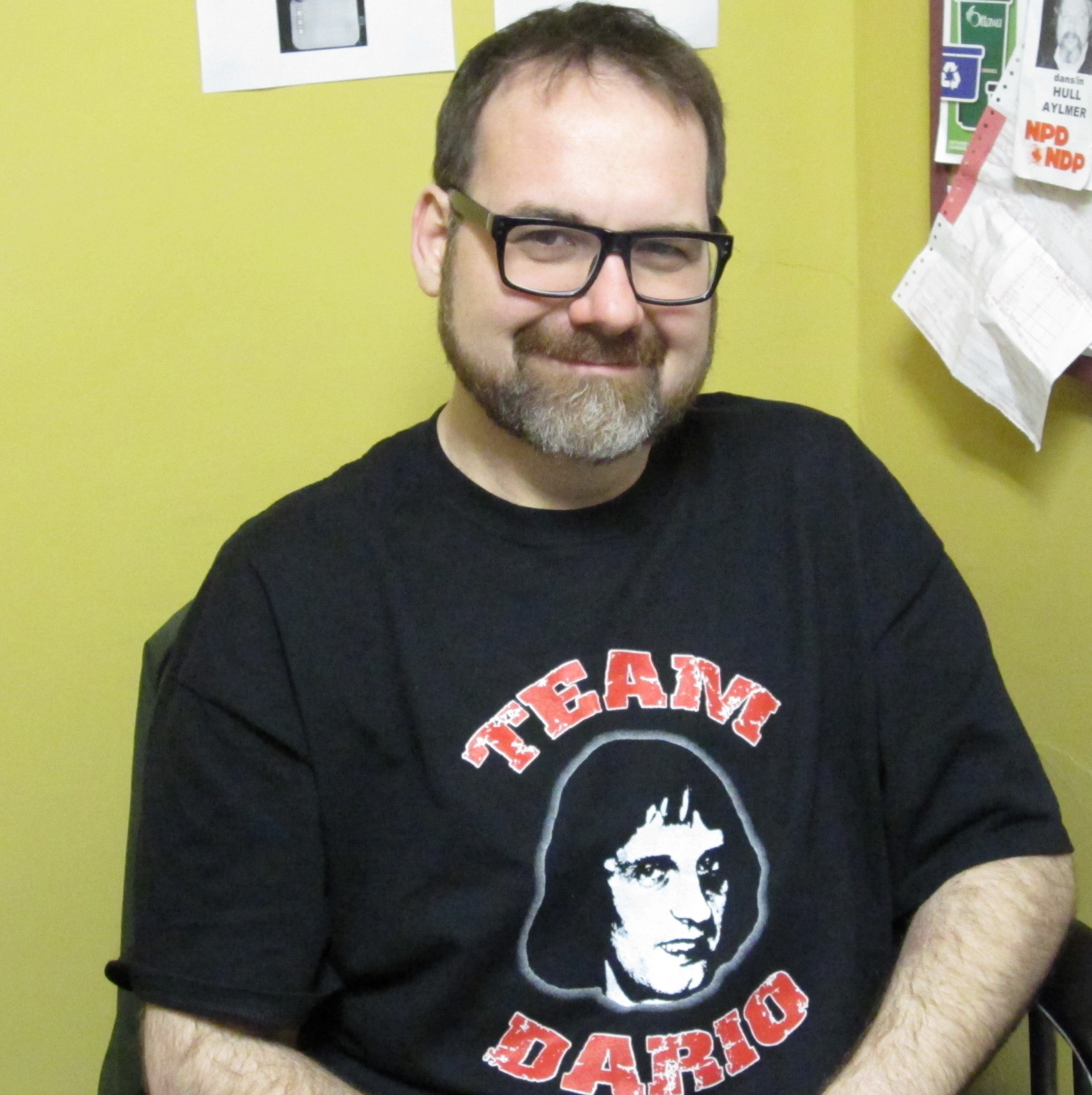
Yvon Soglo at his rehearsal space for "Izm" before his Artsmania interview (photo by Anita Malhotra)

Yvon Soglo at his rehearsal space for “Izm” before his Artsmania interview (photo by Anita Malhotra)

AM: What is a b-boy?

Soglo: A b-boy is a “break boy.” The “b” stands for “break,” so when you’re practicing the dance you’re b-boying, and if you’re a girl you’re b-girling. The break in the song is when there are no more words. The melody goes down and the song is carried by the drummer. That’s why we’re called b-boys and b-girls, because we dance to the break. So my name being Crazy Smooth, in the dance world they would call me “B-Boy Crazy Smooth” or “Break Boy Crazy Smooth.” Continue reading

Posted in DANCE | Tagged , , , , , , , , , , , , , , , , , , , , | Leave a comment

INTERVIEW WITH PAULINE OLIVEROS

By Anita Malhotra

Composer and accordionist Pauline Oliveros has been experimenting with sound for more than six decades. She made her name in the 1960s as a pioneering electronic music composer and member of the San Francisco Tape Music Centre. Since then, she has continued her explorations as a composer, performer/improviser, professor, and most notably as founder of the Deep Listening Institute, based in New York State, which is dedicated to the heightened appreciation of sounds through performances, workshops and new technologies.

Anita Malhotra spoke with Oliveros after she performed a series of improvisations on the digital accordion with percussionist Jesse Stewart at Ottawa’s Glebe St. James United Church on March 17, 2011.

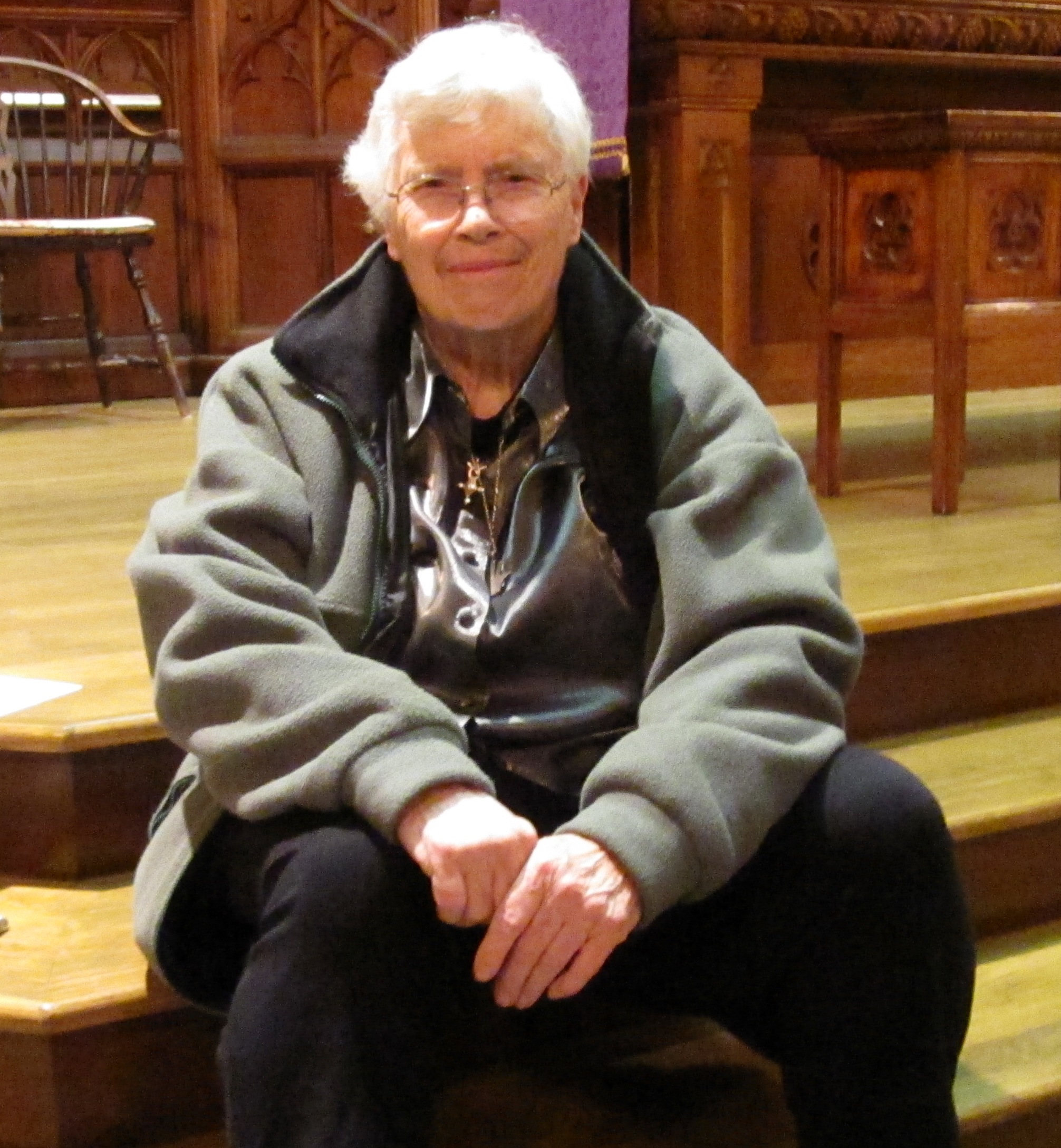
Pauline Oliveros after her concert at Ottawa's Glebe St. James United Church

Pauline Oliveros after her concert at Ottawa’s Glebe St. James United Church

AM: Where did your interest in music and sound come from?

Oliveros: From my mother and my grandmother, who were pianists, and they taught.

AM: What was some of the music that made an impression on you when you were younger?

Oliveros: All the music that I heard.  And I heard a lot of different kinds of music. I heard country music, I heard jazz, I heard symphonic music, opera, everything you can think of except very modern music.

AM: Did you start playing the accordion when you were young?

Oliveros: Yes, I was nine years old.

AM: Why did you choose the accordion?

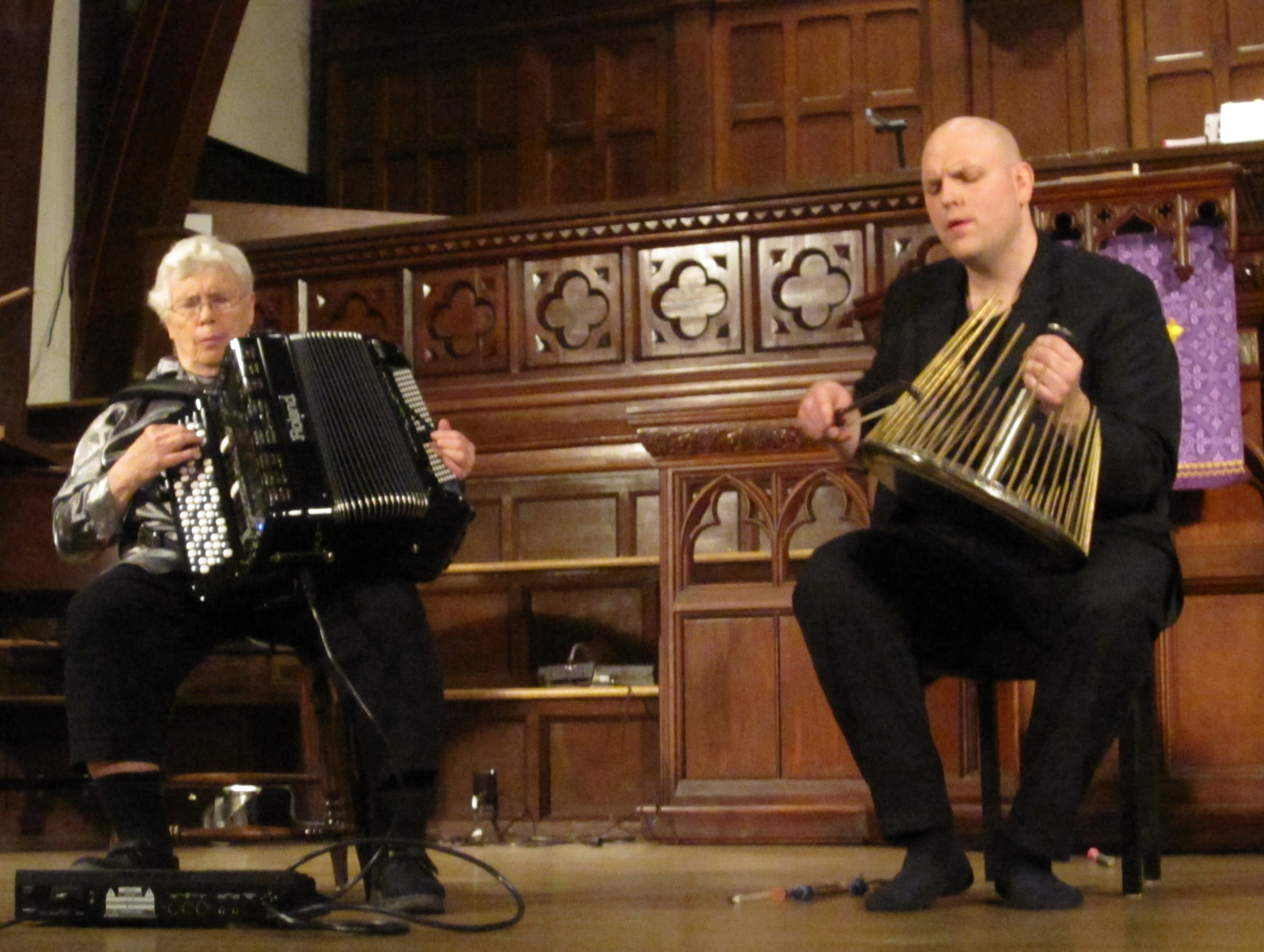
Oliveros performing on digital accordion with Ottawa percussionist Jesse Stewart in Ottawa on March 17, 2011

Oliveros performing on digital accordion with Ottawa percussionist Jesse Stewart in Ottawa on March 17, 2011

Oliveros: My mother brought one home. She was going to learn to play it so she could teach it and increase her income. And I got fascinated with it, so she backed off and let me do it.

AM: What did you find so fascinating about the instrument?

Oliveros: The sound and just the fact that it was different from the piano, yet it still had some familiarity. Continue reading

Posted in MUSIC | Tagged , , , , , , , , , , , , , , , , , , , , , , , , , , , , , , , | 1 Comment

INTERVIEW WITH LEE DEMARBRE

By Anita Malhotra

Director Lee Demarbre’s films are infused with a passion for B movie genres: Hong Kong action flicks, horror movies, musicals, Blaxpoitation films and Mexican wrestling films, to name a few. A 16mm short – Harry Knuckles and the Treasure of the Aztec Mummy – launched his career in 1999, garnering a Slamdance film festival award. Demarbre followed up with a string of genre-bending films, from the low-budget 16mm cult film Jesus Christ Vampire Hunter (2001) to the big-budget horror film Smash Cut (2009).

Anita Malhotra spoke with Demarbre on April 19, 2011 at Ottawa’s Mayfair Theatre, where he is co-owner and programmer.

Lee Demarbre in his office at Ottawa's Mayfair Theatre after his Artsmania interview

Lee Demarbre in his office at Ottawa’s Mayfair Theatre after his Artsmania interview

AM: When did you start making films?

LD: When I was very young, when Raiders of the Lost Ark came out, that was the first film that made me think, “This is something maybe I can do when I grow up.” It wasn’t the movie itself, it was the poster, because the poster said, “From the makers of Jaws and Star Wars.” The poster made me think, “Oh, that’s a profession. The guy who made Star Wars and the guy who made Jaws are teaming up to make Raiders. That’s gonna be a good movie.” And I learned about Steven Spielberg and George Lucas and starting buying books and reading them at a very young age.

AM: How old were you when Raiders came out?
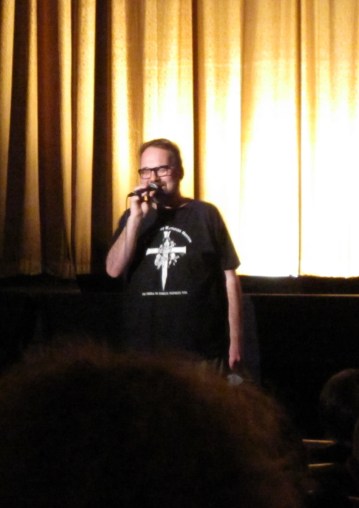
Demarbre speaking at the 10th anniversary screening of "Jesus Christ Vampire Hunter" on March 25, 2011 at Ottawa's Mayfair Theatre

Demarbre speaking at the 10th anniversary screening of “Jesus Christ Vampire Hunter” on March 25, 2011 at Ottawa’s Mayfair Theatre

LD: Eight.

AM: When did you actually start shooting films?

LD: Spielberg’s story of how he got into filmmaking as a young boy is inspiring. He borrowed his Dad’s camera. He just started shooting stuff in 8mm. And I said, “Dad, do you have a camera I can use? And he’s like, “No.” My Dad was a military guy.

I started playing on tape recorders. I’d record movies off the TV, or plays, and I’d edit them. I would take Monty Python albums and I would choose one of the characters I wanted to be and remove all that dialogue and then record my own dialogue. In a way I was constructing a narrative, you know, without visuals.

When I moved to Ottawa I wanted to afford a video camera, so I started working at this Chinese restaurant in town that was controlled by the Italian mob. I was washing dishes and they were running prostitutes out of the kitchen. It was kind of scary. These cooks got into a fight one day and one of the cooks cut off the fingers of the other cook, and I was asked to replace the guy with the missing fingers. It was really frightening. I was young, too. I was working with pimps and gangsters. But as soon as I afforded my camera, I quit.

So now I had a camera. I could use my VCR as a playback machine and I could edit on my camera. One of the first things I did was take movies like Raiders of the Lost Ark and cut my own trailers, having fun like that.
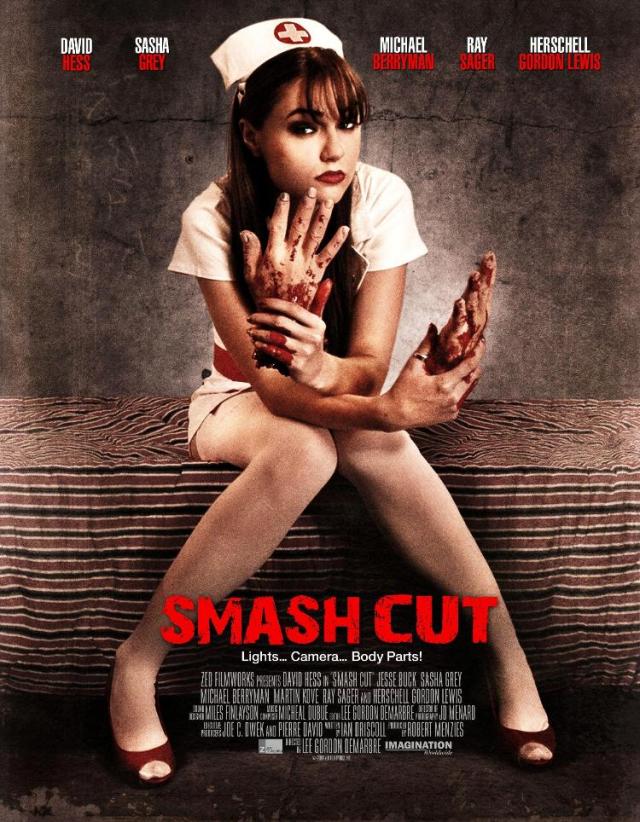
Poster for Demarbre's film "Smash Cut" (2009), featuring fomer adult film actress Sasha Grey, who later appeared in Steven Soderbergh's "The Girlfriend Experience" and the TV show "Entourage"

Poster for Demarbre’s film “Smash Cut” (2009), featuring fomer adult film actress Sasha Grey, who later appeared in Steven Soderbergh’s “The Girlfriend Experience” and the TV show “Entourage”

AM: What were your earliest movies like?

LD: I met a friend in high school who shared the same passion, so we started what we called “Basement Wardrobe.” Basement Wardrobe was either my basement or his basement and we would raid our parent’s wardrobes, and based on what we found in the closet, we would create these little skits. Just a few years ago I digitized a lot of them to DVD – 88 short films that I made before I finished high school. Just before I graduated, we made a short feature film called The Hacker on VHS. We both worked at a video store, and I had friends who worked at other video stores, and we were able to release this movie independently in video stores.

Continue reading

Posted in FILM | Tagged , , , , , , , , , , , , , , , , , , , , , , , , , , , , , , , , , , , , | 2 Comments

INTERVIEW WITH HARRI STOJKA

By Anita Malhotra

One of Austria’s best-known jazz musicians, guitarist Harri Stojka began performing in 1970 and has since released more than 15 LPs and CDs. Playing in Viennese rock bands as a young teen, he formed his own jazz-rock band at 17, and at 24 was invited to play at the prestigious Montreux Jazz Festival. Equally at home playing rock, punk, funk and jazz guitar, Stojka, a Vienna-born Roma, now specializes in the music closest to his heart: gypsy jazz.

Anita Malhotra spoke with Stojka in his dressing room after a concert sponsored by the Austrian Cultural Forum on Feb. 18, 2011 at Ottawa’s Arts Court.

Harri Stojka in his dressing room after his Feb. 18, 2011 concert at Ottawa's Arts Court

Harri Stojka in his dressing room after his Feb. 18, 2011 concert at Ottawa’s Arts Court

AM: Tell me about your first experiences with music when you were a child.

Stojka: My first experience was listening to the Beatles. I was born in 1957. Beatlemania was eight years old and my older sisters always listened to the Beatles. George Harrison was my first experience of hearing a solo guitar player. When I saw George Harrison, I said, “I want to be a solo guitar player.” I was eight years old.

Harri Stoijka as a young boy with his parents

Harri Stoijka as a young boy with his parents

AM: I read that you first started playing at age six when your father bought you a plastic guitar. Can you tell me that story?

Stojka: I know the story from my sisters. My Dad came home with a little plastic guitar and gave it to me. And instead of smashing the guitar in the corner, I sat there and started to practice. Nobody knows why. I practiced three weeks on this instrument. And my Dad said, “Wow, he has talent for guitar playing” and he bought me a bigger guitar. Continue reading

Posted in MUSIC | Tagged , , , , , , , , , , , , , , , , , , , , , , , , , , , , , , , , | 2 Comments

INTERVIEW WITH JOHN SHOWMAN

By Anita Malhotra

Classically trained fiddle-player John Showman is the co-founder of two thriving and stylistically contrasting Toronto-based bands the Foggy Hogtown Boys (bluegrass) and the Creaking Tree String Quartet, whose latest CD, a hybrid of roots, bluegrass, jazz and classical music, has been nominated for two 2011 Juno Awards. More recently, he founded the indie-country band New Country Rehab, which released its first CD in January.

Anita Malhotra spoke to Showman, who was at his Toronto home, by telephone on Tuesday, February 8, 2011.

John Showman at the Sixth Gallery in Toronto (photo by David Leyes)

John Showman at the Sixth Gallery in Toronto (photo by David Leyes)

AM: How did you get started on the violin?

Showman: I started playing when I was six. It’s hard to remember why I chose violin but I remember my grandfather taught himself to play Canadian fiddle tunes, so I must have had a consciousness of that. I didn’t really get to know his playing until I started playing myself, but I remember picking up a violin in Grade 1 music class. I picked it up, started playing it, got lessons right away, and never looked back.

AM: Tell me about your early violin training.

John Showman playing at Hugh's Room in Toronto on Nov. 9, 2010 (photo by Mike Lake)

John Showman playing at Hugh’s Room in Toronto on Nov. 9, 2010 (photo by Mike Lake)

Showman: I don’t remember my first teacher really well at all. I do remember a teacher I had in high school whose name was Vic Pomer, and he was very good. I was with him for five years. He was a crusty dude from Winnipeg who was just cool enough that I respected and feared him. He went to one of the big Russian schools in Kiev, where he mastered the real classical technique. And he taught me all the units of playing. He would break down technique into little pieces and would teach me those one at a time, like building blocks. I got a really good education from him in how to play classical violin, and I was able to apply those techniques to pretty much everything I do. Continue reading

Posted in MUSIC | Tagged , , , , , , , , , , , , , , , , , , , , , , , , | 1 Comment

INTERVIEW WITH SANDRA SCHULBERG

By Anita Malhotra

Sandra Schulberg is a New York-based producer whose credits include Waiting for the Moon (Sundance Grand Jury Prize, 1987) and the Oscar-nominated Quills. Her most recent project, Nuremberg: Its Lesson for Today, was shown at the 2010 Berlin Film Festival and is now making its away across North American theatres and film festivals. It’s a frame-by-frame restoration of a 1948 film made by her father, Stuart Schulberg, about the first Nuremberg Trial. The original film was shown in Germany as part of a postwar campaign to “denazify” and re-educate Germans, but was never shown in U.S. theatres.

Anita Malhotra spoke to Schulberg, who was at her New York office, by telephone on Thursday, Jan. 13, 2011.

Sandra Schulberg restored her father's 1948 film in collaboration with documentary filmmaker Josh Waletzky

Sandra Schulberg restored her father’s 1948 film in collaboration with documentary filmmaker Josh Waletzky

AM: I find it fascinating that you have in a way completed a circle by bringing your father’s film – which was never shown in North America theatres – to North American screens. Why did you decide to restore the film Nuremberg: Its Lesson for Today?

Schulberg: The big impetus was when I saw the film for the first time in 2004 and began to look into what had happened in the U.S. with it. I learned that it had actually been suppressed and began to feel that there was a big hole that needed to be filled in terms of the reporting of the trial in the United States. This film had been produced by the U.S. government presumably for German and American audiences, and yet the second part of that equation had never been completed. So right away it occurred to me that there was a historical mandate.

Marine Corps Sgt. Schulberg, youngest member of the OSS (Office of Strategic Services) Field Photo - War Crimes Unit (Schulberg Family Archive)

Marine Corps Sgt. Schulberg, youngest member of the OSS (Office of Strategic Services) Field Photo – War Crimes Unit (Schulberg Family Archive)

Also, we had recently emptied my mother’s apartment after her death and found an extraordinary cache of documents telling the story of the making of the film and all the political obstacles that my father and Pare Lorenz faced, Pare having been the person at the War Department who hired my father to make the film. As I began poring through these documents, I really became personally interested in the story, and I became more and more convinced that this was an untold story that should be told.

I don’t think I ever would have attempted it if I hadn’t been a filmmaker myself because, although I don’t think there’s any mystery to film restoration,  I do think you have to be an experienced producer or director to undertake something like this. But that was a non-issue because I’ve been a professional producer for 30 years. So I had no excuse. I had the legacy that I had inherited and I realized that I was qualified to do it, so it was a matter of raising the money. Continue reading

Posted in FILM | Tagged , , , , , , , , , , , , , , , , , , , , , , | 4 Comments

INTERVIEW WITH BHAT BOY

Bhat Boy is an Ottawa-based artist whose fantastical cityscapes and other works can currently be seen at two Ottawa galleries as well as on a briskly selling jigsaw puzzle recently released by the German company Ravensburger. Anita Malhotra interviewed Bhat Boy at his home in the Glebe – a neighbourhood he paints often – as he prepared for a hectic day of gallery appearances.

"Bhat" Boy on Dec. 11, 2010 at his exhibit at the Snapdragon Gallery (photo by Anita Malhotra)

“Bhat” Boy on Dec. 11, 2010 at his exhibit at the Snapdragon Gallery (photo by Anita Malhotra)

AM: On your website you mention that you are the son of a cleaning lady and a spy.

BB:  Well, it’s true. But my mom worked at Nortel at first. Everyone in the family worked at Nortel at one point – Nortel actually sponsored our family to come to Canada from England. But she got laid off later on and she went into being a cleaning lady because she found that it was much less stressful.

As for my dad being a spy, it wasn’t until after the Iron Curtain came down and my father retired that I began to realize what my father did. It’s funny, I never knew what my Dad did when I grew up. He just worked for the government. It wasn’t until much later that I realized that he was a “Q” type, if you put it in a James Bond scenario, because he worked in the development of spy technology.

Bhat Boy at his home (photo by Anita Malhotra)

Bhat Boy at his home (photo by Anita Malhotra)

AM: What were your earliest experiences with art?

BB: I had a Grade 2 teacher named Mrs. Kostach and she had a great influence. I remember we went to see the Nutcracker and we were all supposed to do a drawing. And I did my drawing of the Nutcracker and she sent it back and told me that I could do better. I was like, “Well, I never!” because my drawing was probably the best one in the class, but still she sent it back because she recognized that I had this ability.

And then, when I was about 13, we had a lodger on the third floor of our house, a Swiss woman who was studying art history, and she was very interested in my art. She used to pay me to make Christmas cards, which was probably my first commission. Continue reading

Posted in ART | Tagged , , , , , , , , , , , , , , , , , , , | Leave a comment

INTERVIEW WITH MAX MIDDLE

By Anita Malhotra

Max Middle is the pen name of Mark Robertson, an Ottawa-based poet and founder of The A B Series, a poetry reading series that features experimental, sound and performance poetry from Canada and around the world. Anita Malhotra interviewed Max on Friday, Nov. 12, 2010 at Chez Lucien, a bustling pub in Ottawa’s Byward Market.

Max Middle interviewed at Chez Lucien (photo by Anita Malhotra)

Max Middle interviewed at Chez Lucien (photo by Anita Malhotra)

AM: Before you actually got into writing poetry, did you have an interest in sound? Were you particularly aware of your sound environment?

MM: I’m not active with music at the moment but have a background in it, specifically keyboards, percussion and drums. I guess I started playing percussion in the school band in Grade 7 and playing drum set, and later on playing drums in rock bands. So yes, that’s an obvious area for the merging of sound and poetry. You’ve got percussion and poetry, where do those two things meet? Because you can make percussive sounds with your voice, and those sounds could be considered either musical in nature or they could be considered literary in nature, depending on how you present them.

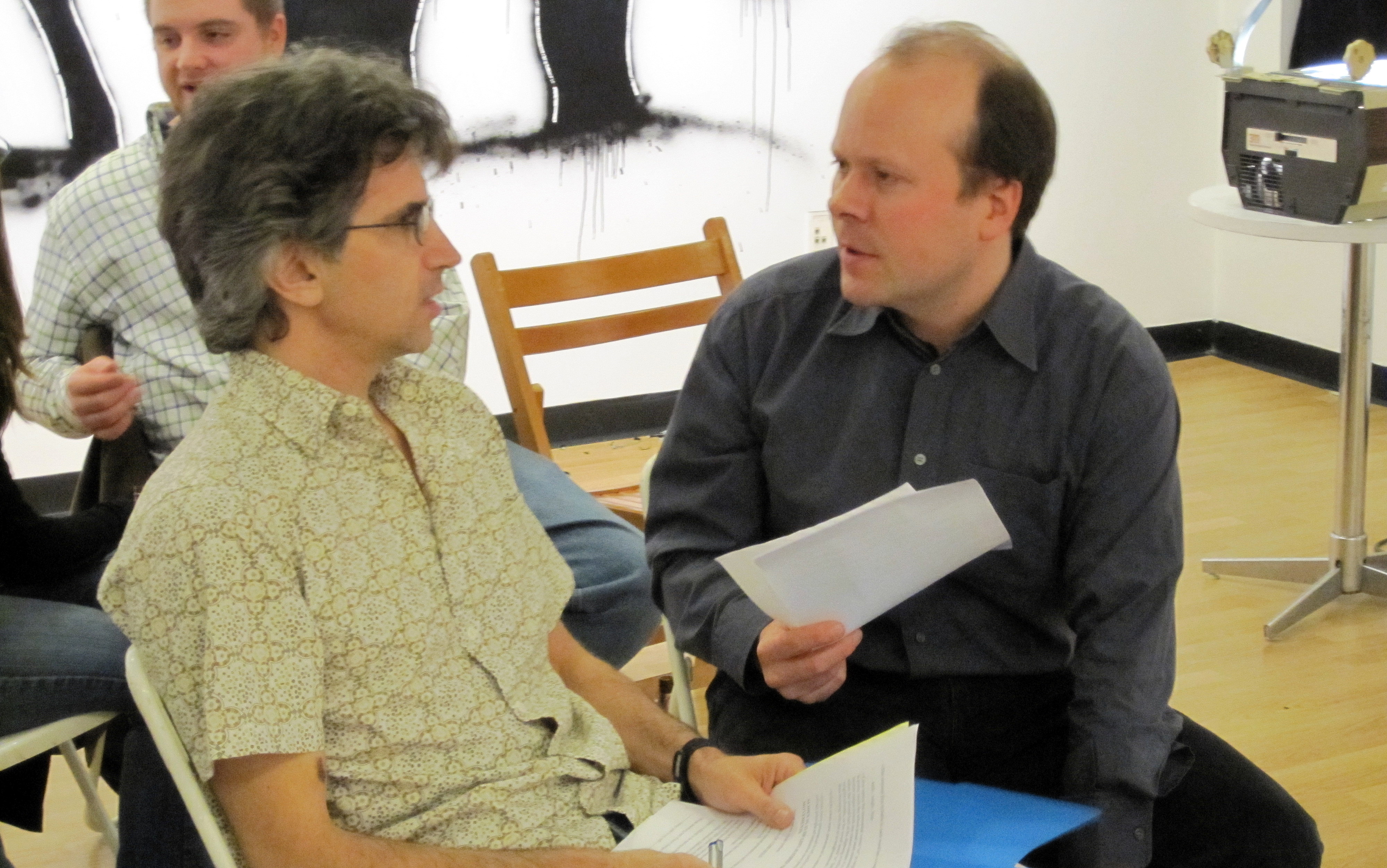
Max Middle talking to poet Louis Cabri before his performance at Ottawa's Gallery 101 on Oct. 30, 2010 (photo by Anita Malhotra)

Max Middle talking to poet Louis Cabri before his performance at Ottawa’s Gallery 101 on Oct. 30, 2010 (photo by Anita Malhotra)

AM: There’s a rhythmic sense in your sound poetry, in your performance. Is that also coming from music, or is that coming more from your writing?

MM: Both. There’s that merge, right, between a form of rhythm that is innate to poetry and that rhythm that is innate to music, and the two don’t have to be strangers to one another. So I can see myself as blending musical rhythm and linguistic/literary rhythms to create a hybrid. So it’s not just rhythm, of course, but as with music, it’s one component in the mix. Continue reading

Posted in BOOKS | Tagged , , , , , , , , , , , , , , , , , , , , , , , , , , | 1 Comment